[Q] is entirely unlike the canonical gospels in which the sayings of Jesus are interwoven with a continuous narrative. During the 1950s this peculiarity of Q was used as an argument against it. No such sayings gospel was known from the early Christian period, the critics charged. Q proponents needed to postulate not just a single text but an entire unknown genre of Christian literature. Ironically, just a few years earlier an amazing document had been unearthed, a document whose existence would turn this argument on its head . . . .The argument sounds persuasive because it relies on the notion of "prediciton confirmed", but the premise, that Thomas is like Q, is faulty. I devoted the last chapter of The Case Against Q to setting out the case that the first third of Q has a clear narrative sequence, with a chronological, geographical, cause-and-effect progression, of the kind that is quite foreign to a sayings Gospel like Q. I argued that these differences between Q and Thomas were actually more telling than the similarities in that they pointed to a source-critical rather than a genre-critical solution to the problem. The reason that the first third of Q is rich in narrative and in narrative sequence is that it corresponds to the section of non-Marcan elements in Matthew's reworking of Mark, located in Matt. 3-11. After that point Matthew works closely with the Matthean order, and it is inevitable that double tradition material loses its narrative sequence.
. . . . Such discoveries are exceedingly rare, and historians must usually be content with rearranging old data in new ways. Short of finding an actual copy of Q, more striking support for the Q document hypothesis can hardly be imagined. From the analysis of gospel interrelationships a hypothetical document had been reconstructed. That document required the existence of a previously unknown literary genre, the sayings gospel. The discovery of the Gospel of Thomas now confirmed that assumption. What had been seen as a weakness of the Q document hypothesis was suddenly transformed into a brilliantly successful prediction.
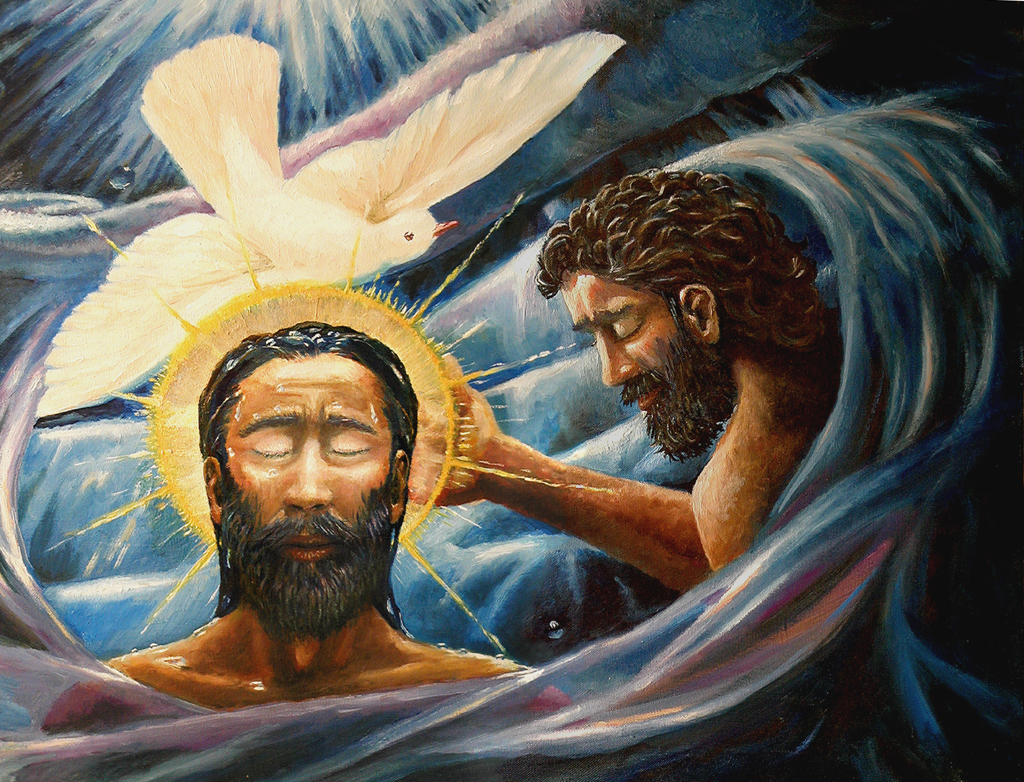
Since many remain unfamiliar with the contents of Q, it is worth reminding ourselves again, in outline, of this narrative sequence. John the Baptist is introduced (Q 3.2) and located in the region around the Jordan (Q 3.3); crowds come to him for baptism (Q 3.7); he speaks to them about repentance (Q 3.7b-8) and he prophesies a “coming one” to whom he is subordinated (Q 3.16-17). Jesus is introduced and the spirit descends on him, and he is called Gods son (Q 3.21-22); the spirit then sends him to the wilderness where he is tested as God's son (Q 4.1-13); he is in Nazara (Q 4.16); he preaches a major Sermon (Q 6.20-49) and after he has finished speaking, he enters Capernaum (Q 7.1), where he heals a Centurion’s Boy (Q 7.1b-10). Messengers from John the Baptist, who is now imprisoned, ask about whether Jesus is indeed the “coming one” (Q 7.18-35), and the ensuing discourse takes for granted that Jesus heals people and preaches good news to the poor, all in fulfilment of the Scriptures, and likewise the teaching presupposes that Jesus associates with tax-collectors and sinners, and that he is criticized for doing so.
I argue that this narrative sequence points to the origins of Q as material source-critically extracted from Luke's non-Marcan, Matthean material. As so often, the devil is in the detail. The popularity of the appeal to Thomas in order to strengthen Q is still present, though, and it arises in part from a misreading of Austin Farrer. In the passage quoted above, Oerter refers only to Farrer (in a footnote) but it is worth looking at what Farrer actually said. His argument was that the strong narrative exordium led the reader to expect a culmination with Passion and Resurrection:
For Q has to be allowed to possess a strongly narrative exordium, not to mention narrative incidents elsewhere interspersed. It is no simple manual of Christ's teaching. It tells us with considerable fullness how John Baptist preached before the public manifestation of Jesus, and how Jesus, appearing in fulfilment of John's prophecies -- and, it would seem, undergoing baptism at his hands -- endured a threefold temptation in the wilderness, after which he ascended a mountain, and was joined by disciples there. Having delivered beatitudes and precepts of life, he "concluded his words" and presently made his way into Capernaum, where his aid was invoked by a centurion on behalf of his servant . . .There are things that Farrer missed in his discussion, and there are some emphases that might be a little different from ours, but Farrer had seen the problem with the Q document that the Q hypothesis implied, and he had seen it more clearly than many of the advocates of the hypothesis. The Q-Thomas alignment is only persuasive on a kind of simple, basic level; it does not bear closer examination.
. . . . . This pattern of symbolism and narrative finds a natural place in St. Matthew's text, where, in our opinion, it indubitably originated. But what sort of place would it find in the imaginary Q? After an exordium so full of dogmatic weight and historical destiny, is it credible that the book should peter out in miscellaneous oracles, and conclude without any account of those events which, to a Christian faith, are supremely significant? . . . What is hard to believe is that he should supply the exordium, while omitting the conclusion; that he should set in train the only story of unique importance, and break it off. (On Dispensing with Q, 59-60)